
It is no secret that having a Village in your community enhances social connectedness and engagement. In fact, surveys of DC Villages demonstrate the impact on Village members' social connections, mobility, and post-hospitalization support, click here to learn more. Currently, there is not a Village in every neighborhood of DC, but the DC Villages Collaborative (DCVC) is working to change that.
DCVC is expanding the Village model across the city, using innovative approaches to strengthen connections, deliver services, and advance equity for older adults. Expansion means reaching underserved neighborhoods, piloting new models, and positioning Villages as key partners in building an age-friendly DC – a goal shared by District leaders.
That commitment was on full display at the 2nd Annual DC Villages Collaborative Celebration last month, where 313 residents gathered at Pennsylvania Avenue Baptist Church in Ward 7. Charon P.W. Hines, Director of the District Department of Aging and Community Living, delivered the keynote, highlighting the role of Villages in supporting older adults and spotlighting DCVC's Incubator Program, which is helping launch new Villages in Ward 7 and Ward 5.
The celebration also drew strong support from city leaders, including DC Council Chair Phil Mendelson, At-Large, Councilmember Anita Bonds, Ward 3 Councilmember Matthew Frumin, and Ward 7 Councilmember Wendell Felder—all affirming the importance of the Village Movement in shaping a more inclusive, age-friendly city.
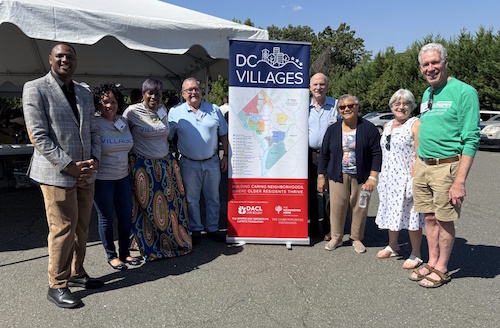
Pictured from left: Councilmember Wendell Felder, DACL Director Charon P.W. Hines, DC Villages Collaborative Executive Director Dr. Katrina Polk, DCVC Board Member Ross Hamory, Council Chair Phil Mendelson, Councilmember Anita Bonds, DCVC Board Member Morgan Gopnik, DCVC Board Chair William Emmet.
What's Next in 2026?
· Village Incubators: New participants will join the Village Movement California Incubator to learn the model and get support for the final launch.
· Ambassador Program Expansion: Building on partnerships with Black churches, the program will broaden to other congregations and civic groups, creating culturally rooted pathways into the Village Movement.
· Help Desk Pilot: A citywide demonstration in affordable housing, staffed by a team and a social worker, will show how Village-led services can efficiently reach large numbers of seniors.
· Innovation Lab: Villages will receive funding to test new programs, expand into diverse neighborhoods, and adopt technology for low-income and minority residents.
Stay informed on DCVC's work by visiting dcvillages.org.

Lorem ipsum dolor sit amet, consectetur adipiscing elit. Suspendisse varius enim in eros elementum tristique.
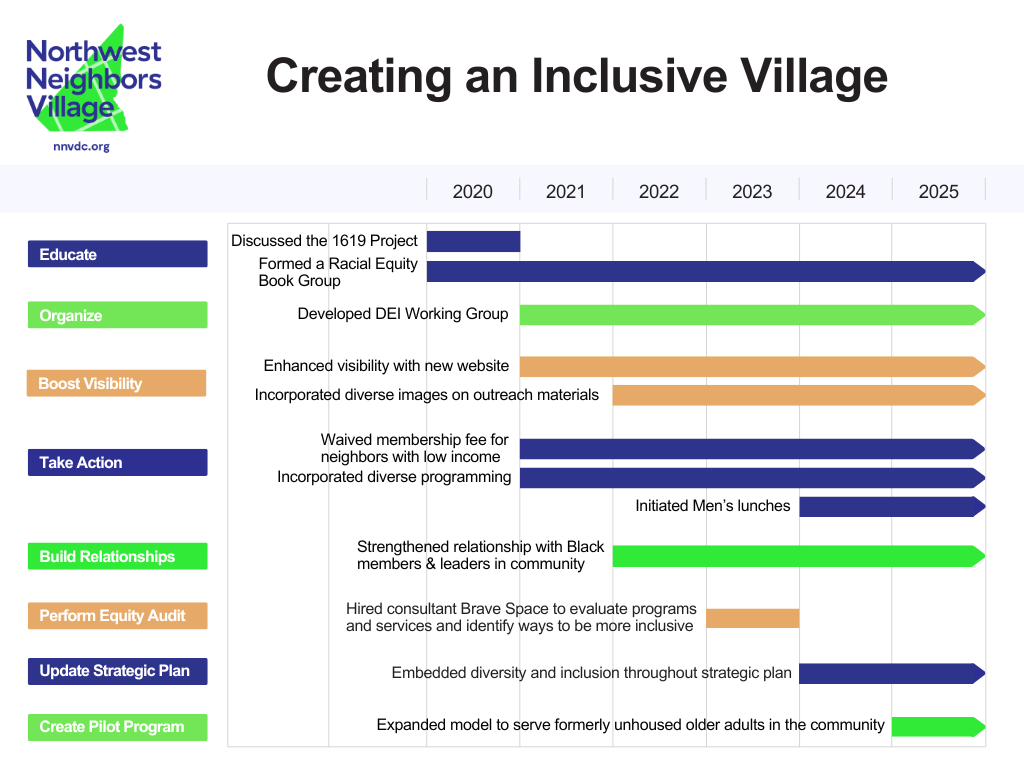
ButtonThrough a centrally-coordinated, local network of screened volunteers and vetted professional providers, Northwest Neighbors Village offers its members transportation to medical appointments, grocery shopping assistance, home repairs and handyman help, computer and technology assistance, access to social and cultural activities and more.


Northwest Neighbors Village
P.O. Box 39135
Washington DC 20016





.png)


.jpg)
